
The Guide - contents
The Storyus GuideReading
For everyone - whatever your role
Arriving Your front page Who sees what Ways to read Views & bookmarksCreating
For members, admins and owners
Getting started Photos & media Journeys Streams Moments Postcards Video Essays Reflections Albums Timelines Magazines Publishing & reachJunior Mode
For guardians and their young storytellers
The idea Being a guardian What your child seesJunior Mode · chapter 3 of 3
What your child sees
The junior home and the lens: what Junior Mode shows, simplifies and refuses.
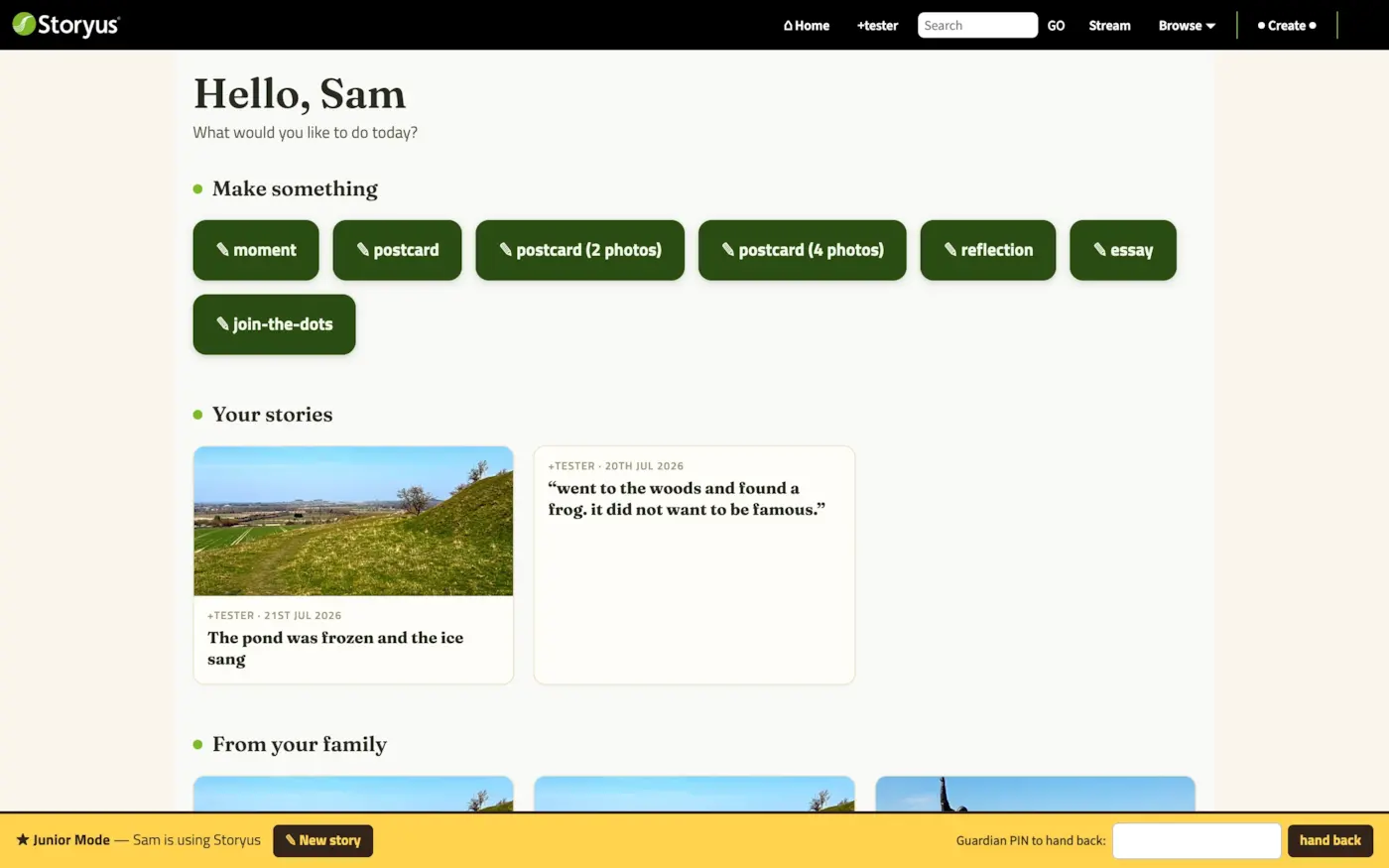
The moment you hand the device over, Storyus becomes their place. A banner stripes the bottom of every page - "Junior Mode - Sam is using Storyus" - so nobody ever mistakes whose hands the device is in, and the home page greets them by name with one question: what would you like to do today?
What they can make
The making suite is real - the same composers adults use, simplified. Moments, postcards in every layout, essays, reflections, join-the-dots timelines, and posts on the family stream. Everything they make carries their byline from the very first moment, and they can only ever edit their own work.
What they can read - and what they can't
Junior Mode reads like the family archive, through a member's eyes: the collectives where they are a junior author, and only those. The lens is strict in both directions:
Handing back is the reverse of handing over: the banner's hand back control asks for the guardian PIN, and the device is an adult's again. Until then, the mode holds - closing the browser or wandering to another page doesn't shake it loose.
That's the whole shape: a real byline, real tools, a real audience of the people who love them - and not one step further. (The idea explains why it's built this way.)
Still stuck after the guide? Help & ideas - write to us, and a person reads every message.